
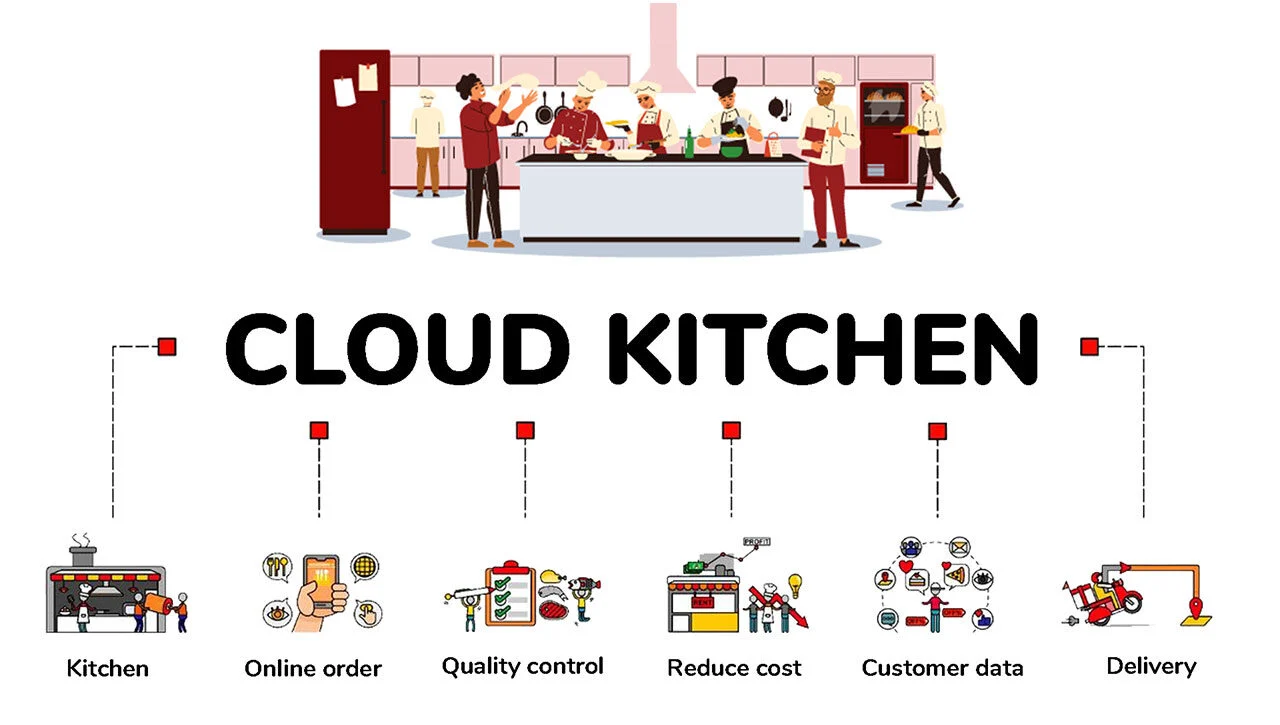
In the age of convenience and digital disruption, the food and restaurant industry is undergoing a dramatic transformation — and cloud kitchens are at the heart of this revolution.

Cloud kitchens, also known as ghost kitchens, virtual kitchens, or dark kitchens, are delivery-only restaurants that operate without a physical dine-in space. Fueled by changing consumer behavior and the booming demand for food delivery, cloud kitchens are reshaping how we think about food, restaurants, and entrepreneurship.
What Is a Cloud Kitchen?
At its core, a cloud kitchen is a professional food preparation facility that is set up for the sole purpose of fulfilling online food orders. These kitchens are not tied to a traditional restaurant front; instead, they rely on food delivery platforms like Uber Eats, DoorDash, Zomato, or Swiggy to reach customers.
They can house one brand or multiple brands under one roof, and sometimes even serve as the back-end kitchen for popular restaurant chains looking to expand their reach without the cost of opening new locations.
Why Are Cloud Kitchens So Popular?
Several factors have contributed to the explosive growth of cloud kitchens:
1. Low Startup and Operational Costs
Opening a traditional restaurant involves hefty costs: renting prime real estate, designing interiors, hiring front-of-house staff, and more. Cloud kitchens eliminate many of these expenses, making them attractive to entrepreneurs and restaurant owners alike.
2. Boom in Online Food Delivery
Consumer behavior has shifted dramatically over the past decade. Busy lifestyles and digital convenience have driven massive growth in food delivery services, especially post-pandemic. Cloud kitchens are designed specifically to cater to this demand.
3. Flexibility and Scalability
Cloud kitchens allow for rapid experimentation. Businesses can test different cuisines, menus, or brand concepts with minimal risk. If a concept doesn’t work, it can be shut down or rebranded quickly.
4. Data-Driven Decisions
These kitchens rely heavily on technology and data analytics. Operators can analyze customer preferences, order patterns, and delivery times to optimize operations and boost customer satisfaction.
Who’s Getting Involved?
The cloud kitchen model is attracting a wide range of players:
Established restaurant chains are using them to expand their reach.
Food entrepreneurs are launching digital-only brands.
Tech companies like Uber and Amazon have shown interest in the space.
Investors are pouring money into startups focused on cloud kitchen infrastructure and logistics.
Challenges of Cloud Kitchens
While the model offers many benefits, it’s not without challenges:
High competition: The low barrier to entry means the market can become saturated quickly.
Dependence on third-party apps: Most cloud kitchens rely on delivery platforms that charge high commissions.
Quality control: Without direct customer interaction, it’s harder to build brand loyalty or get immediate feedback.
Logistics: Efficient delivery and maintaining food quality during transit is critical.
The Future of Cloud Kitchens
The cloud kitchen industry is expected to keep growing rapidly. According to some market analysts, the global cloud kitchen market could reach $100 billion by 2030.
As technology evolves, we can expect more AI-driven kitchens, robotic food preparation, hyper-local delivery hubs, and tighter integration with smart devices. Even traditional restaurants may shift more operations to cloud kitchens to adapt to modern consumer needs.
Final Thoughts
Cloud kitchens are more than just a trend — they’re a paradigm shift in how food businesses operate. By prioritizing delivery, minimizing costs, and leveraging technology, they offer a compelling alternative to traditional dining models.
Whether you’re a food lover, entrepreneur, or tech enthusiast, the rise of cloud kitchens is a fascinating evolution worth watching — and tasting.